How Long Does It Take to Build a Pool in Tampa Bay? Permit to Final Inspection
Plan your pool around milestones you can check: a settled design, a submitted application, an issued permit and a final inspection.
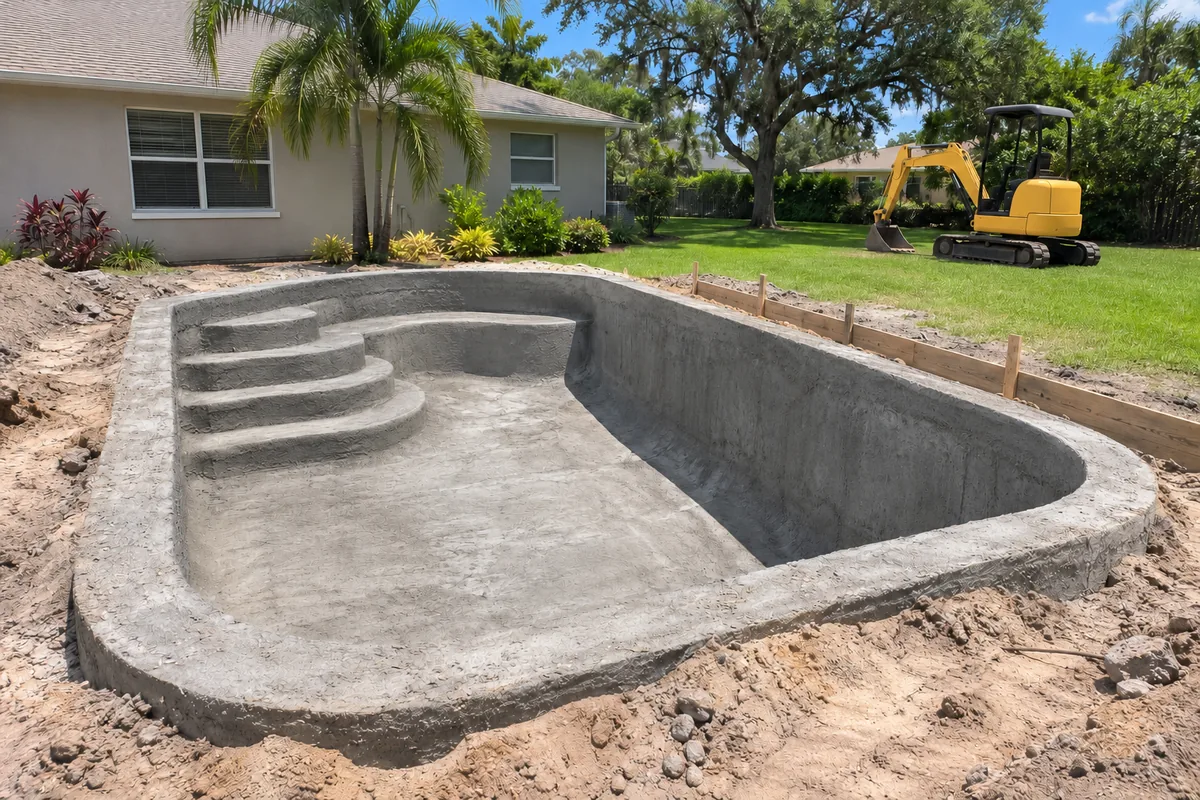
The permit records put local numbers around part of that journey. They do not measure the conversations before filing or promise a swimming date. Use them to ask a builder for a written schedule that starts with your yard and ends with the final.
The short version
- All five covered permit offices have samples of 60 finished pool permits, with separate review and construction intervals.
- Application to final timing leaves out the design, contract and HOA work that happens before the application is filed.
- Track the permit, plan changes and inspections with the builder so each next step has a clear owner.
The numbers from local permits
| Permit office | Application to issue | Issue to final | Application to final | Sample | 12-month permits finaled so far |
|---|---|---|---|---|---|
| City of Tampa | 48 days | 156 days | 216 days | 60 | 27% |
| Hillsborough County (unincorporated) | 4 days | 124 days | 128 days | 60 | 47% |
| Pinellas County (unincorporated + contract cities) | 42 days | 146 days | 186 days | 60 | 29% |
| Pasco County | 26 days | 128 days | 162 days | 60 | 44% |
| Manatee County | 37 days | 150 days | 200 days | 60 | 33% |
Medians from 60 finished new-pool permits per office, filed between October 2024 and March 2025, months vary by office (dates from each permit's record page); jobs still open are left out, so real waits run a little longer; medians do not add up across columns. Hillsborough County marks a pool permit issued early in the process, so its issue-to-final stretch holds most of the wait. The last column is the share of pools filed in the last 12 months that already passed final inspection or closed.
Use the timing table as a local reference
The table above includes samples for the City of Tampa, unincorporated Hillsborough, the Pinellas county office, Pasco and Manatee. Each uses 60 finished pool permits. Read application to issue separately from issue to final, then use the measured application to final interval for the whole recorded span.
- Choose the permit office that handles your property.
- Keep measured medians separate from a proposed completion date.
Read more
The City of Tampa sample had a median of 216 days from application to final inspection. Unincorporated Hillsborough's sample had a median of 128 days for that interval. The office matters, but these figures also describe the particular finished projects sampled. They do not establish how quickly a new application will move or how long the builder you hire will need. Ask which recorded milestone the builder means whenever you discuss a start or finish date.
Separate medians do not necessarily add up to the median for the full journey. Each column measures its own interval across the sample. These records also cover finished permits, rather than every pool still underway. Pinellas coverage here follows the county office, including unincorporated areas and contract cities; it does not include the separate city building departments of St. Petersburg or Clearwater. Match your jurisdiction before using a row to frame questions about your schedule.
Give design and contract their own place on the calendar
The permit clock starts at application, after some of your planning has already happened. Ask the builder to show design decisions, site information, the contract and any HOA approval as distinct items. Settle the pool, spa, deck and screen enclosure scope before treating a proposed schedule as complete.
- Agree on the drawing and equipment before comparing schedules.
- Ask what must be ready before the builder submits the application.
Read more
Start with how you want to use the backyard. Show the builder the lanai, the shade you want to keep and the route into the yard. Decide which features belong in the first plan, including a spa, heater or screen cage. Ask what information the designer still needs from you. A written list of open decisions makes the early work easier to follow and helps you see what stands between a conversation and an application.
Read the schedule alongside the contract. Ask who handles the permit submission and who follows up on plan comments. Keep HOA approval visible where it applies, rather than assuming it is included in a permit review interval. Request a plan for documenting changes after you sign. If a finish or layout changes, have the builder explain the effect on both scope and schedule before agreeing to it. The permit samples do not assign a duration to this preparation.
Prepare for the right office's permit review
Review begins with the application for your jurisdiction. Tampa uses its Pool Permit application; unincorporated Hillsborough uses Residential Miscellaneous Permit - Building through HillsGovHub. Ask the builder to explain the documents for your office and how you will hear about any requested revisions.
- Check that the submission uses the correct permit category.
- Keep the submitted plan and any later revision together.
Read more
Tampa requires a site plan showing the pool, property lines, on-site structures and power lines, along with building plans signed and sealed by a Florida licensed architect or engineer. Hillsborough requires a scaled site plan with setback dimensions and digitally signed and sealed plans. Pinellas requires structural plans digitally signed and sealed by an architect or engineer, a Safety Act Letter, electric company no-objection letters and a recent survey plus site plan. Use the official links for the office handling your address.
Published review figures describe different things. Pinellas publishes a residential review target of 14 days, without making it pool-specific. Pasco's undated pool checklist reports a monthly average review time of 5 days. Neither figure replaces the observed application to issue intervals in the table above or establishes your permit's issue date. Ask the builder whether an application has been filed, whether comments need answers and what action is pending. Those questions are more useful than treating every review figure as the same clock.
Ask for a construction sequence that fits your pool
Have the builder walk you through the proposed dig, shell work, plumbing, deck, equipment and start-up. For a concrete pool, include steel and gunite or shotcrete in that discussion. For fiberglass, ask for the sequence for the selected shell. The records do not give durations for individual construction stages.
- Identify the next stage and what must happen before it.
- Include deck, equipment and screen enclosure coordination in schedule discussions.
Read more
Use the construction plan to understand what you will see in the yard. Ask where access will be, what happens around the existing fence and where the pump and filter will sit. Have the builder explain how plumbing, shell work and equipment fit together for your design. If you have chosen a spa spillover, heater or special deck finish, keep those items in the same discussion so the schedule follows the written scope you accepted.
The issue to final interval includes the elapsed time between those recorded milestones. It does not tell you how many days people worked at the property or how much time each task took. Ask the builder to distinguish an upcoming work visit from a stage that is fully complete. When the calendar changes, request the revised sequence and the reason. That keeps your family informed without inventing a fixed number of days for the dig, shell, deck or start-up.
Make inspections and the final visible
Ask which inspections apply to the approved plan and who schedules them. Tampa lists steel/drain/bond, pressure test, electrical bonding and pool barrier/alarm among its pool inspections. Your schedule should also name the final inspection so progress is measured beyond how finished the backyard looks.
- Keep the permit number and inspection information with your contract.
- Discuss the selected safety feature before final inspection planning.
Read more
Inspection arrangements differ by office. Hillsborough assigns standard inspections a date rather than a time and lists a charge for time-specific inspections. Pinellas lists pool inspection codes including E Pool Bond and B Partial Final Pool Protect, with a 3:30 p.m. cut-off for next-day requests. Ask the builder to use the correct office's instructions. A scheduling cut-off describes when to request an inspection; it does not describe the remaining duration of your entire pool project.
Florida allows a new residential pool to meet its safety rule through a compliant barrier or specified alternatives, including an approved safety cover and alarm or latching options. Ask the builder how the selected feature is reflected in the plan and final inspection preparation. Keep the final record with your other pool documents. The application to final samples end at that inspection milestone, so a conversation about completion should identify it clearly rather than rely on an informal description of the pool being nearly done.
Keep revisions, weather and outside approvals in view
HOA approval, plan revisions, site conditions and summer storms can affect the sequence you discuss with a builder. Ask how schedule changes will be communicated. If a private provider is part of the proposal, have the builder explain the assigned work and the required paperwork for your jurisdiction.
- Record a changed decision along with its effect on the schedule.
- Ask who follows up when an approval or inspection is pending.
Read more
An open decision can hold up the next practical step. Keep a shared list of pending items such as a revised deck layout, an HOA response or equipment selection. Ask which item affects the next scheduled task and who will resolve it. After rain or a change in site conditions, request an updated sequence from the builder. That gives you something concrete to follow while keeping weather and ground conditions specific to the project in front of you.
A private provider can perform building code inspection services only within the disciplines covered by that person's licensure. Tampa accepts a Private Provider package when required, and Hillsborough has its own submission instructions. Pinellas also publishes registration and process information. Ask who handles those documents and how the provider's role fits the project. The permit data do not measure a time saving from private provider use, so ask about the actual arrangement without assuming it shortens your build.
Agree on a simple way to track the build
Before signing, ask for a written schedule with named milestones, a contact for updates and a way to record changes. Check the license at myfloridalicense.com. Once the builder files, keep the permit number handy so you can follow the official record alongside the construction updates.
- Compare 3 written proposals using the same design and requested features.
- Ask for the permit number before the dig.
- Link payment milestones to inspections in the written agreement.
Read more
Use each update to answer a few practical questions: what is complete, what comes next and what needs a decision from you. Keep the agreed drawing, contract, changes and permit information in one place. If a payment is linked to an inspection, ask for the corresponding record before following that milestone. The builder handles the design, contract, permit and work; your file helps you follow those commitments and ask clear questions as the yard changes.
Florida's deposit rule requires a contractor receiving more than 10 percent initially to apply for permits within 30 days and start work within 90 days after issuance, unless an exception applies. These deadlines do not supply a pool completion date. Ask the builder to explain the schedule in the contract on its own terms. To start comparing plans, pick up to 3 builders on the quote form and they will contact you to look at your yard.
Common questions
How long did pools take from application to final in Tampa?
The City of Tampa sample of 60 finished pool permits had a median of 216 days from application to final inspection. That clock starts at filing, so it leaves out earlier design and contract work. It describes the sampled permits rather than setting a completion date for your own pool.
Does the permit timing include the design stage?
No. The measured intervals begin at permit application or permit issue, as labeled in the table above. Ask the builder to show design, site documents, the contract and any HOA approval separately. A schedule for your family needs those early decisions as well as the recorded permit and inspection milestones.
Can I add the review median to the construction median?
Use the measured application to final median for that full interval. The median application to issue and issue to final figures each describe their own set of elapsed intervals, so adding them need not reproduce the full-period median. None of these measures assigns a duration to individual tasks such as excavation or decking.
Will private provider inspections shorten the project?
The supplied permit timing does not measure a private provider time saving. Ask the builder to describe the provider's assigned services, required submissions and coordination with the permit office. Florida limits a private provider's building code inspection services to disciplines covered by that person's licensure. Follow the arrangements for your specific jurisdiction.
What should I ask for before the dig?
Ask for the permit number, the agreed plan and a written sequence showing the next work and inspection milestones. Confirm who will update you about changes and how payments connect to inspections. Keep any open HOA or design decisions visible so the builder can explain their effect on the schedule.
Get quotes from up to 3 pool builders who build in your area
Pick up to 3 pool builders in our network. They will contact you to look at your yard and price your pool, deck and extras. Your request is free, with no obligation.
Get up to 3 quotes