How to Choose a Pool Builder in Tampa Bay: 9 Checks Before You Sign
Turn your pool shortlist into a set of checks you can finish before signing.
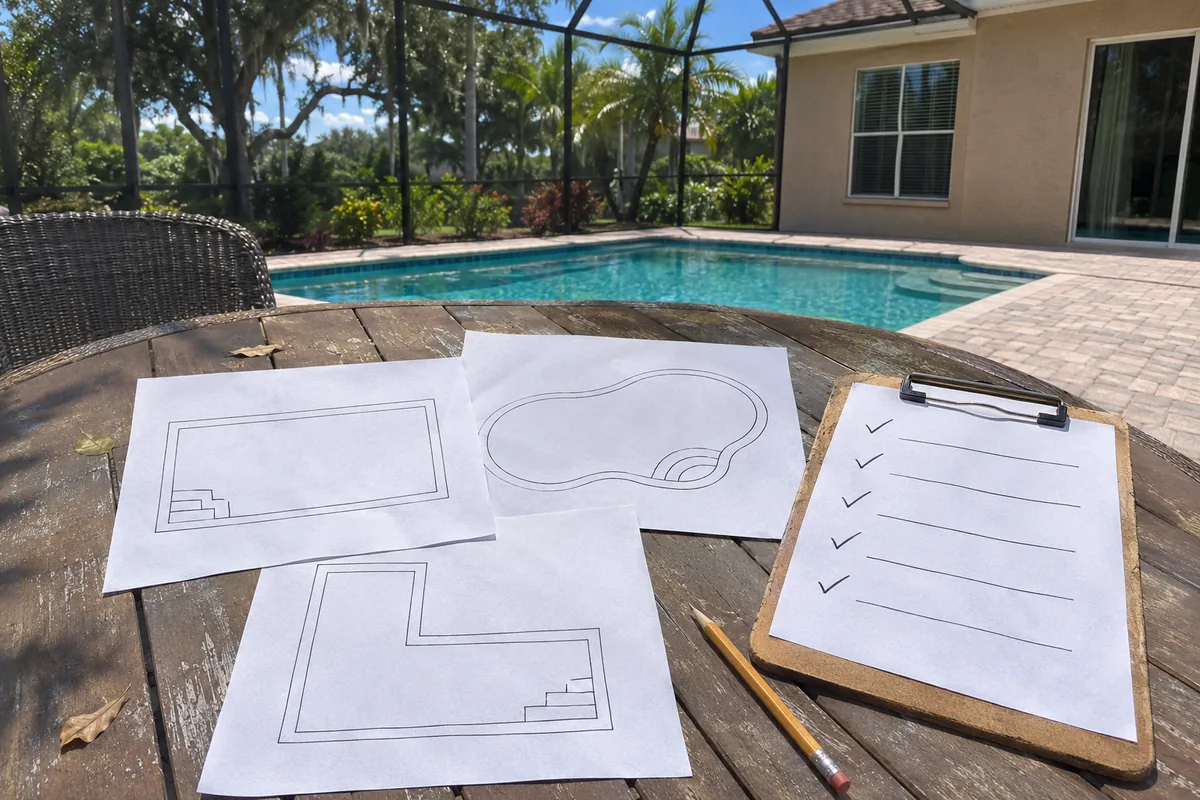
Start with the license record and local permits, then give each builder the same yard plan and written questions. These nine checks help you connect the shell, deck, spa and screen enclosure you want with the contract, permit paperwork and payment schedule you are being asked to accept.
The short version
- Use permit activity to find builders to call, then check the license record and compare written quotes.
- Give three builders the same pool plan, equipment choices, deck scope and safety questions for a useful comparison.
- Get permit responsibility, payment milestones, safety work and the complete pool scope in writing before you sign.
The numbers from local permits
The 3 most active builders filed 11% of homeowner pools. City of Tampa and Hillsborough, Pinellas, Pasco and Manatee permits, Nov 2025 - Oct 2026. See every builder.
Check 1: Look up the license record yourself
Go to myfloridalicense.com and look up the license record associated with the proposed contractor. Compare it with the name and license number in your project papers. A number shown on an earlier permit is a starting point for checking the record yourself.
- DBPR uses CPC for Certified Pool/Spa Contractor and RP for Registered Pool/Spa Contractor.
- Specialty code B under CPC and RP is Residential Pool/Spa Contractor.
- Ask the builder to explain any difference between the proposal and the record.
Read more
Florida defines a residential pool and spa contractor's scope to include construction, repair and servicing of a residential swimming pool, hot tub or spa. Use the DBPR record to check the contractor named in your proposal, and read the information displayed there. Keep your lookup notes beside the quote so you can return to the same record when the contract and permit papers arrive.
If different names or license numbers appear across the quote, contract and example permit, ask for an explanation before you sign. The question is specific: which contractor will be responsible for your proposed project, and which record should you check? Record the answer in your project notes. Do the lookup even when a neighbor recommended the builder or the company has substantial local permit activity.
Checks 2 and 3: Read local activity, pool mix and finaled share
Use local permit volume to see who filed homeowner pool projects in the areas covered here. Then read the pool versus pool-with-spa mix and finaled share. These are records of activity and status, useful for forming questions about the work you are planning.
- Rankings measure filed new inground homeowner pools, with home-builder package pools left out.
- Pool and spa mix tells you what kinds of projects appear in the records.
- Use finaled share to ask about permit progress, rather than treating it as a workmanship score.
Read more
The data covers November 2025 through October 2026 across the City of Tampa and the county permit sources described on this site. Separate city building departments outside those sources are not included. Start with builders whose recorded locations and pool mix relate to your project, then ask about specific permits. Rankings are never paid. A higher count shows more filed activity, so pair it with a license check and matching quotes.
Read finaled share as the share showing a finaled status so far in the records. Because the period includes recently filed pools, it is not a complete history of every project's eventual outcome. Ask the builder to explain example permits and their current status. Look at the description, location and dates together. A percentage alone does not establish construction quality, and a declared median job value does not price the pool in your yard.
Check 4: Get three written quotes on the same plan
Give each builder the same proposed shell, size, depth, spa, deck and equipment choices. Ask them to see the yard and put their scope in writing. Matching inputs let you compare the work described in each proposal alongside the total you are being quoted.
- Share the same drawing and list of features with each builder.
- Ask each quote to identify included work, allowances and exclusions.
- Resolve differences in the written scopes before comparing the totals.
Read more
A pool-only quote and a pool-with-spa quote describe different projects. The same is true when one proposal includes pavers, a heater and a screen cage while another leaves those choices open. Make a simple comparison using the actual items in your plan. Ask each builder to explain anything that is absent, described broadly or based on a different material from the one you requested.
Only a builder who sees your yard can price your pool. Bring up access, the existing lanai and the space for equipment during the visit, then ask how those details appear in the proposal. To begin, pick up to 3 pool builders in our network and they will contact you to look at your yard. Keep the same project questions ready for each conversation so the written quotes answer the same brief.
Check 5: Name who handles the permit before the dig
The builder you hire handles the design, contract, price, permit and work. Ask the written scope to identify the permit responsibility and issuing office. Get the permit number before the dig, then use the public record to check the description and listed contractor.
- Confirm the office for your property rather than relying on its mailing-city name.
- Ask for the permit number and the project description it covers.
- Include the proposed safety arrangement in the permit conversation.
Read more
The City of Tampa, unincorporated Hillsborough and the other county sources here use their own permit records. Separate cities can have different building offices. Ask the builder which office covers your property and where you can follow the application. The public Accela searches show descriptions, statuses, declared job values and the listed contractor without a login. Match the record to your address and proposed pool.
Ask how the pool, spa, deck and enclosure work are described in the application documents. Also ask which safety option is proposed under Florida's pool safety provisions and where it appears on the drawings or forms. Keep the permit number and safety documents with the signed scope. That gives you specific records to discuss when construction starts and when the builder explains progress toward the final inspection.
Check 6: Read the deposit and payment milestones
Ask for a written payment schedule tied to clear inspection milestones. Florida's deposit rule says a contractor receiving more than 10 percent initial payment must apply for permits within 30 days. Keep that rule distinct from the deposit amount proposed in your contract.
- The rule addresses what follows an initial payment above the stated threshold.
- Work must start within 90 days after permits issue under the same rule, unless an exception applies.
- Ask what inspection record supports each payment milestone in the proposed schedule.
Read more
The initial-payment threshold is not a stated deposit cap. Read the actual proposed amount, the payment dates and the work attached to each installment. Ask the builder to explain the sequence from payment to permit application and from permit issue to construction. Keep the signed agreement, payment receipts and permit dates together so you can follow the proposed schedule using the same set of records.
For later installments, ask for milestones you can connect to the inspection record and written scope. If a payment description is unclear, have the builder explain what must happen and which document you will receive before that payment is requested. Ask how approved changes affect the schedule. Put the answer in writing while reviewing the contract, so the timing of payments does not depend on a remembered sales conversation.
Check 7: Sort out the Notice of Commencement paperwork
Florida requires a Notice of Commencement before commencing improvements, except those exempt under section 713.02(5). That section exempts improvements with a direct contract price of $2,500 or less. Ask the builder who will arrange the notice and provide your copy.
- Identify who prepares and handles the notice in your project paperwork.
- Ask about the issuing office's verified document requirements for your pool.
- Keep the notice, contract, payment records and written changes in one folder.
Read more
Local requirements make the document conversation more specific. Hillsborough requires a recorded certified Notice of Commencement before the first inspection. Pinellas requires Notices of Commencement onsite for every inspection. Pasco requires a notarized, recorded notice when the project exceeds $2,500. Ask the builder to identify the requirement applicable to your permit office and explain who handles each step, rather than copying the process from a friend's project in another county.
If the contract includes lien-related language you do not understand, identify the exact paragraph and ask for an explanation before signing. Keep this conversation separate from simply checking that a Notice of Commencement appears in the folder. Ask which documents you will receive as payments are made and at project close, and have that list put in writing. Save the answers with the contract rather than relying on assumptions about what a particular form accomplishes.
Check 8: Write down the whole pool you are buying
Read the scope as a description of the finished project, from the shell to the equipment and deck. Ask for the pool size, depth, materials, spa, enclosure and start-up work to be identified. A clear description makes quote comparisons and later change discussions easier.
- Identify the shell type, dimensions, depth, coping and interior finish.
- List the pump, filter, heater and any spa equipment being supplied.
- Describe the deck, screen enclosure, safety features and start-up work.
Read more
Read broad phrases closely. If the quote says pool equipment, ask which pump and filter are included. If it says deck, ask for the material and extent of the work described in the proposal. Do the same for the spa spillover, heater and screen enclosure. Compare those answers with the drawing you approved so the written scope describes the pool you have been discussing during yard visits.
Ask how proposed changes will be described and priced in writing, and what documents you will receive at handover. Include the safety products, instructions and explanation of start-up work in that conversation. Before signing, return to the quote comparison and check that every builder has answered the same questions. The useful result is a complete scope you understand, with remaining choices and exclusions plainly identified in the project papers.
Check 9: Resolve gaps before you sign
Treat missing information as a reason to ask for a concrete answer. Unexplained contractor names, a vague scope, unclear permit responsibility or payment milestones you cannot follow all leave questions in the agreement. Get those questions answered in writing before committing to the project.
- Ask for an explanation when names or license numbers differ across documents.
- Get a written answer about missing features, permit responsibility or payment triggers.
- Check that the final contract reflects the pool plan and answers you agreed on.
Read more
Return to your notes from the license lookup, permit checks and yard visits. Each unresolved item should have a specific question attached to it: which contractor is named, what work is included, who handles the enclosure or what inspection supports a payment? Ask the builder to update the relevant document. A verbal answer is useful for discussion, but the agreement should carry the details you are relying on.
Before signing, read the complete proposal alongside the drawing and payment schedule once more. Confirm that the safety arrangement, permit responsibility and handover documents are described, and that approved changes are reflected in the same set of papers. Keep a copy you can use throughout the build. That gives you a practical reference for future conversations about the pool, from the application through the final inspection and remaining contract work.
Common questions
Does a high permit count prove a pool builder's quality?
The ranking measures filed homeowner pool activity, with home-builder package pools excluded. It does not establish workmanship. Use local volume and pool versus spa mix to choose who to call, then check the license record and compare written quotes based on the same plan for your yard.
Where do I check a Florida pool contractor's license record?
Use myfloridalicense.com and compare the record with the contractor name and license number in the proposal. DBPR uses CPC for Certified Pool/Spa Contractor and RP for Registered Pool/Spa Contractor, with specialty code B for Residential Pool/Spa Contractor. Ask about differences across your documents before signing.
What should I give builders so their quotes are comparable?
Give each builder the same plan and feature list: shell type, pool size, depth, spa, coping, deck, equipment, heater, screen enclosure and safety work. Ask them to see the yard and identify included work, allowances and exclusions in writing. Resolve scope differences before comparing totals.
Does Florida's 10 percent rule limit the deposit to that amount?
The verified rule addresses a contractor receiving more than 10 percent initial payment: they must apply for permits within 30 days. Under the same rule, work must start within 90 days after permits issue, unless an exception applies. The threshold is not a stated deposit cap.
What permit information should I get before the pool dig?
Ask for the issuing office and permit number, then check the public record for your address, project description and listed contractor. Keep that information with the plans, safety paperwork and contract. Ask the builder to explain the status and how you will receive inspection updates as work progresses.
Get quotes from up to 3 pool builders who build in your area
Pick up to 3 pool builders in our network. They will contact you to look at your yard and price your pool, deck and extras. Your request is free, with no obligation.
Get up to 3 quotes