Pool Permits in Pinellas County: County vs. City Offices
Start a Pinellas pool project by matching your property to its building department.
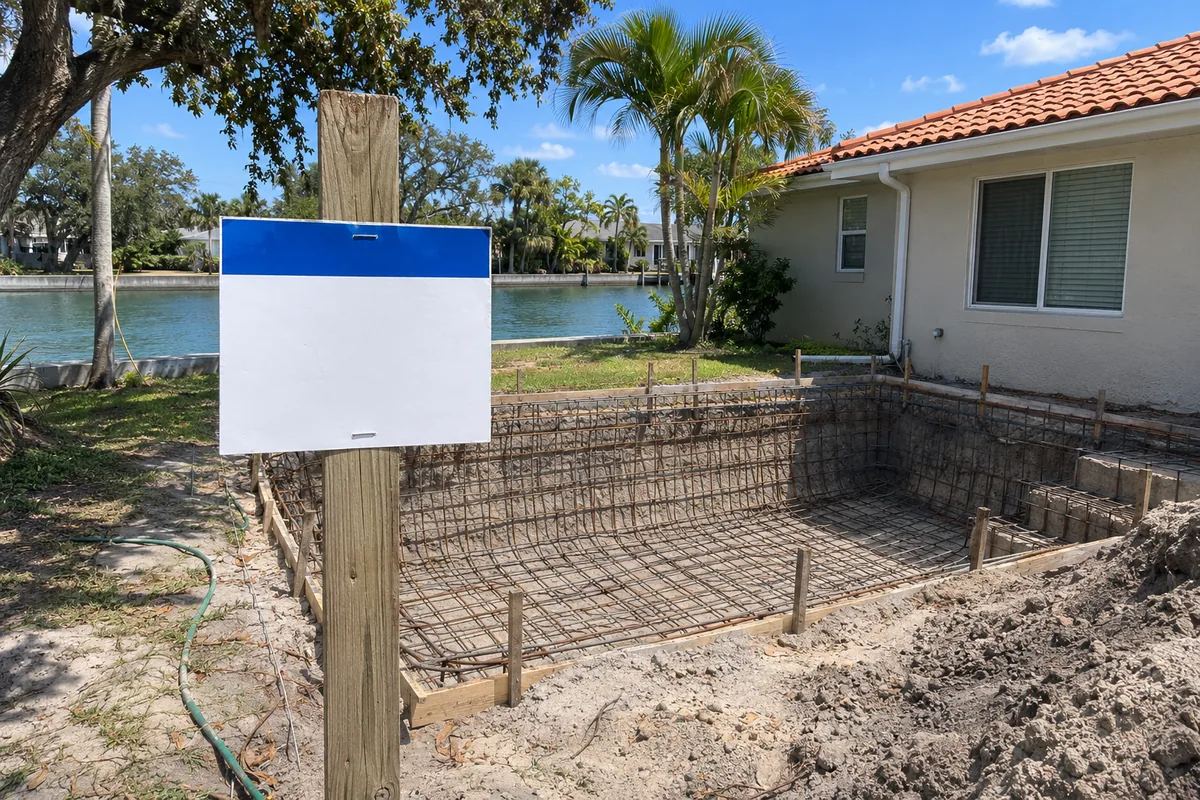
A county application, a St. Petersburg application and a Clearwater application follow different instructions. The table above points you to the relevant official sources. Once you have the office, ask the builder to walk through the site documents, safety option and inspection plan for the pool and deck you want.
The short version
- Pinellas County handles unincorporated areas and specified contract cities; other city building departments have their own pool application processes.
- County applications require signed and sealed structural plans, a recent survey, a site plan and specific supporting letters.
- The county's published residential review target is 14 days, without making that target specific to pool applications.
The official sources
| Topic | What the official source says | Source |
|---|---|---|
| Who issues | Pinellas County Building Services handles permits and inspections for Belleair Beach, Belleair Shore, Indian Rocks Beach, Oldsmar and Safety Harbor. | source |
| Permit type | Pinellas County files residential pools under category Pools and Spas, with an Inground subtype. | source |
| Documents | Pinellas County requires structural plans digitally signed and sealed by an architect or engineer. | source |
| Documents | Pinellas County requires a Safety Act Letter for pools. | source |
| Documents | Pinellas County requires no-objection letters from the electric company for pools. | source |
| Documents | Pinellas County requires a boundary or topographic survey issued within the last five years plus a site plan. | source |
| Documents | Pinellas County requires Notices of Commencement to be onsite for every inspection. | source |
| Inspections | Pinellas County inspection codes for pools include 1110 E Pool Bond and 1052 B Partial Final Pool Protect. | source |
| Inspections | Pinellas County's cut-off for next-day inspection requests is 3:30 p.m. | source |
| Review time | Pinellas County publishes a residential permit review target of 14 days, not specific to pools. | source |
| Flood | Pinellas County requires a Flood Zone Application for new construction in A and V zones. | source |
| Private provider | Pinellas County has a Private Provider page for registration and the permitting process. | source |
| Documents | St. Petersburg's pool checklist requires a site plan or survey showing the pool within zoning setback requirements. | source |
| Who issues | Clearwater's online permitting system for pool and spa applications is currently limited to licensed contractors. | source |
| Documents | Clearwater requires two copies of plans with the pool application. | source |
| Permit office | Towns on this site | In our permit data | Links |
|---|---|---|---|
| City of St. Petersburg Building Permitting | St. Petersburg | No (county records shown) | Office page |
| City of Clearwater Planning & Development | Clearwater | No (county records shown) | Office page |
| City of Largo Building Services | Largo | No (county records shown) | Office page |
| Pinellas County Building and Development Review Services | Palm Harbor, East Lake, Lealman, Safety Harbor, West Lealman, Oldsmar | Yes | Office page |
| City of Pinellas Park Building Development | Pinellas Park | No (county records shown) | Office page |
| City of Dunedin Building Codes and Permits | Dunedin | No (county records shown) | Office page |
| City of Tarpon Springs Building Development | Tarpon Springs | No (county records shown) | Office page |
| City of Seminole Building | Seminole | No (county records shown) | Office page |
| City of Gulfport Community Development | Gulfport | No (county records shown) | Office page |
Pinellas County (unincorporated + contract cities): 328 new inground pool permits filed Nov 2025 - Oct 2026 (323 for homeowners), filed as "Residential Pools and Spas (BR-POL)".
Choose the office before collecting application forms
Use the table above to separate the county office from city building departments. St. Petersburg and Clearwater publish their own pool instructions, as do other cities through their building departments. Ask the builder to identify the jurisdiction for your property before using a document checklist or review target.
- Match the property's jurisdiction with the office named on the application.
- Keep the correct official source with your project documents.
Read more
St. Petersburg's pool checklist requires a site plan or survey showing the pool within zoning setback requirements. Clearwater requires two copies of plans with the pool application, and its online pool and spa permitting system is currently limited to licensed contractors. Those are city-specific instructions. If your project is in one of these cities, ask the builder to use that city's source and explain the submission rather than carrying over the county's requirements by habit.
The directory's permit data have not yet included the separate building departments of St. Petersburg, Clearwater, Largo, Pinellas Park, Dunedin, Tarpon Springs, Seminole or Gulfport. A county-based ranking therefore cannot describe every pool filed throughout Pinellas. Use it to understand activity in the covered records, then check the license and compare written quotes. For your own application, the useful starting point is the department that actually handles your property and the instructions attached to its pool process.
Understand unincorporated areas and contract cities
Pinellas County Building Services handles permits and inspections for Belleair Beach, Belleair Shore, Indian Rocks Beach, Oldsmar and Safety Harbor. Its coverage also includes unincorporated areas. These contract cities are part of the county office's scope, so a city name does not automatically mean a separate city application.
- Ask the builder to confirm the office for the specific parcel.
- Keep permit data coverage separate from the name used for your town.
Read more
Palm Harbor, East Lake, Lealman and West Lealman are listed here with the Pinellas County office. For a property in one of these areas, begin with the county's official residential permit source and have the builder confirm the address. For Oldsmar or Safety Harbor, the county's contract-city role also matters. Keep the office name on your notes so the plan preparer, builder and homeowner are all working from the same set of application instructions.
The county-office dataset includes unincorporated areas and contract cities. Its homeowner pool count leaves out pools sold in a home builder's new-home package, while including homeowner pools at existing houses and with newly built homes. That scope helps you read the directory, but it does not establish what any particular yard needs for approval. Use permit activity to find builders filing locally, then ask each one to explain the application and written scope for your address.
Gather the county's plans, survey and supporting letters
Pinellas County files residential pools under Pools and Spas with an Inground subtype. Its verified requirements include structural plans digitally signed and sealed by an architect or engineer, a Safety Act Letter, electric company no-objection letters, and a boundary or topographic survey plus a site plan.
- The boundary or topographic survey must be issued within the last five years.
- Ask who obtains the electric company letters and Safety Act Letter.
- Have the builder match the submitted plans to the agreed pool layout.
Read more
Bring the survey you have to the builder and ask whether it meets the county's stated requirement. Have the builder explain the site plan for the pool, deck and surrounding yard, along with who prepares the structural plans. Review the submitted layout against the proposal you accepted. If the spa, pool footprint or deck changes during design, keep the agreed version together with the application documents so you can follow which plan everyone is using.
The supporting letters belong on the checklist alongside the drawings. Ask who requests the no-objection letters from the electric company, who prepares the Safety Act Letter and how you will receive copies. Pinellas also requires the Notice of Commencement to be onsite for every inspection. Florida requires that notice before improvements begin, except exempt improvements with a direct contract price of $2,500 or less. Have the builder explain the document responsibilities before the work and inspections are put on the calendar.
Keep review targets separate from inspection scheduling
Pinellas publishes a residential permit review target of 14 days, without specifying pools. That target does not set the issue date for your application. Separately, the county's cut-off for next-day inspection requests is 3:30 p.m. Ask the builder to explain both the review status and upcoming inspections.
- Ask what is pending instead of assuming a target is an issue date.
- Keep inspection requests and results with the permit information.
- Confirm who coordinates inspections if a private provider is involved.
Read more
The county's published pool inspection codes include 1110 E Pool Bond and 1052 B Partial Final Pool Protect. Ask the builder which inspections apply to your approved plan and which milestone is next. Have the builder connect that milestone to the work in the yard and any payment linked to it. The request cut-off is a scheduling instruction, not a construction duration. Keep the Notice of Commencement onsite as required for every inspection, with responsibility for it clearly assigned.
The permit timing table in the separate timing guide measures elapsed intervals from finished records. It answers a different question from the county's published review target. For your project, ask when the application was filed, whether comments need a response and what action comes next. If a private provider is proposed, use the county's registration and process information. Florida limits a private provider's building code inspection services to disciplines within that person's licensure; ask the builder to describe the actual role in writing.
Choose the safety option and prepare for the final
A new residential pool can meet Florida's safety rule with a compliant barrier or specified alternatives under section 515.27. Ask the builder which option is proposed and how it appears in the Safety Act Letter and project plan. Keep that decision visible through final inspection planning.
- Discuss safety features while the pool, deck and access layout are still being drawn.
- Ask for the selected safety work to appear in the written scope.
Read more
A barrier under section 515.29 must stand at least 4 feet high on the outside. It cannot have gaps, openings or footholds that let a young child get under, through or over it. Gates must swing outward, away from the pool, and must be self-closing with a self-latching lock. Walk through the proposed entry from your lanai and yard with the builder so the safety discussion relates to the way your family will actually move around the pool.
The alternatives in section 515.27 include an approved safety pool cover, exit alarms, self-closing latching devices and a certified pool alarm. Ask the builder to explain the option chosen for your layout, including how any screen enclosure fits the overall plan. Keep the safety paperwork with your pool documents and request the final inspection record when the project reaches that stage. A finished deck and installed equipment are useful progress markers, but the final record gives you the official inspection milestone to retain.
Address flood-zone paperwork for the actual property
Pinellas County requires a Flood Zone Application for new construction in A and V zones. Ask the builder to identify the property's flood-zone information and explain any applicable application work. Keep that discussion tied to the parcel and proposed pool rather than a general assumption about coastal addresses.
- Use the county's official permitting guide for its flood application requirement.
- Have the builder explain flood-related paperwork alongside the site plan.
Read more
Start with the address and the proposed layout. Ask the builder what flood information is being used and whether the county's A- or V-zone new-construction requirement applies to the submission. Have the builder identify the Flood Zone Application in the project checklist when required. Keep copies with the survey and site plan. That gives you a specific document to discuss as the application moves through review, without borrowing a requirement from a different county or city.
For a pool handled by a city department, return to that city's official source and ask the builder about the property-specific submission. The county's verified Flood Zone Application requirement does not establish every city's flood process or a special fee, setback or construction detail for your lot. Put any additional proposed work in the written scope and ask which office instruction it answers. This keeps the flood discussion concrete while you settle the pool footprint, deck and related project documents.
Use the public record to follow your pool project
For a county-office project, use the Pinellas Accela public search. Permit records show the description, status, declared job value and licensed contractor without a login. Start with the address and keep the permit number once the builder supplies it, so later checks return to the same project.
- Match the address and description to the new inground pool.
- Use a separate license check before signing the building contract.
- Save the final inspection information with your other pool documents.
Read more
Follow the county portal source in the table above, search the property address and look for the pool description. Ask the builder to provide the permit number before the dig, then compare the record with the project you agreed to build. If your property uses a separate city building department, begin with that city's official permitting source instead. A county search without a matching result does not establish that no city permit exists for the property.
Use the record to ask clear questions about progress. A declared job value is the amount entered when filing, not an invoice for your finished pool. The contractor details provide information to compare with a separate check at myfloridalicense.com. Keep the agreed drawing, contract, changes and inspection information together. As work approaches the final, ask the builder what remains and request the final record. You can then follow the project through documented milestones instead of relying only on what is visible from the lanai.
Common questions
Does Pinellas County issue every pool permit in the county?
No. The county handles unincorporated areas and the contract cities of Belleair Beach, Belleair Shore, Indian Rocks Beach, Oldsmar and Safety Harbor. St. Petersburg, Clearwater and other cities have separate building departments. Match the property to its jurisdiction before using a checklist, public search or review target.
Which office handles a pool in Palm Harbor?
Palm Harbor is listed here with Pinellas County Building and Development Review Services. Start with the county's residential pool instructions and have the builder confirm the office for the property. The county files residential pools under Pools and Spas with an Inground subtype and publishes the supporting document requirements for that application.
What survey and letters does a county pool application need?
The county requires a boundary or topographic survey issued within the last five years plus a site plan. Its verified requirements also include a Safety Act Letter, no-objection letters from the electric company and digitally signed and sealed structural plans. Ask the builder who obtains each item and how you will receive copies.
Will the county approve my pool application within 14 days?
The published figure is a residential permit review target, not a pool-specific approval commitment. Ask the builder to explain when the application was filed, what its status shows and whether any comments need a response. Keep the review target separate from inspection scheduling and the full application to final timeline.
Can I check a St. Petersburg or Clearwater pool in the county data?
The directory has not pulled the separate St. Petersburg and Clearwater building department records yet. Use the relevant city's official permitting source to follow a project there. Ask the builder for the issuing office and permit number, then check the address and description against the pool in your written agreement.
Get quotes from up to 3 pool builders who build in your area
Pick up to 3 pool builders in our network. They will contact you to look at your yard and price your pool, deck and extras. Your request is free, with no obligation.
Get up to 3 quotes